Fuel tracking, honestly measured
The number on the box.
The number on your odometer.
They're rarely the same.
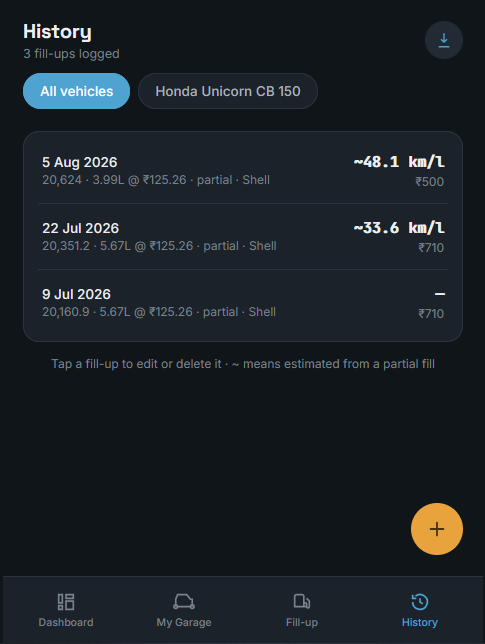
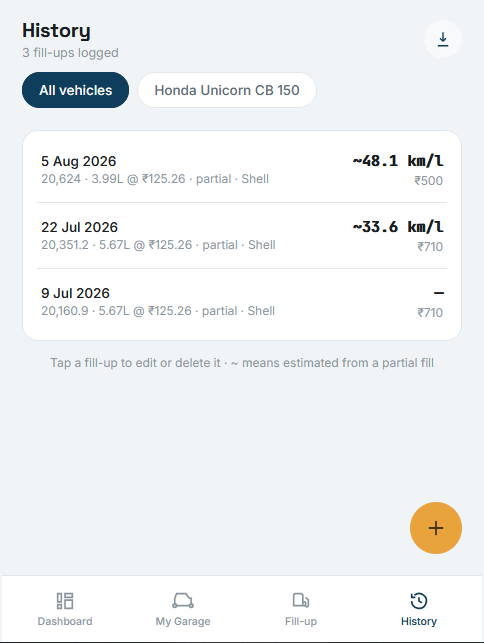
FuelLog logs every fill-up — full tank or not — and works out what you're actually getting, vehicle by vehicle. No lab conditions, no best-case testing. Just your driving, your fuel, your real number.
Manufacturers test in a lab.
You drive in traffic.
Claimed mileage figures come from controlled conditions — steady speeds, empty roads, no traffic signals. Your actual commute has none of that. The gap between the two isn't a defect in your vehicle; it's a gap in the number itself. FuelLog closes that gap by measuring what actually happens at the pump, fill after fill.
What it actually does
Built around how fill-ups really happen
Full tank or not
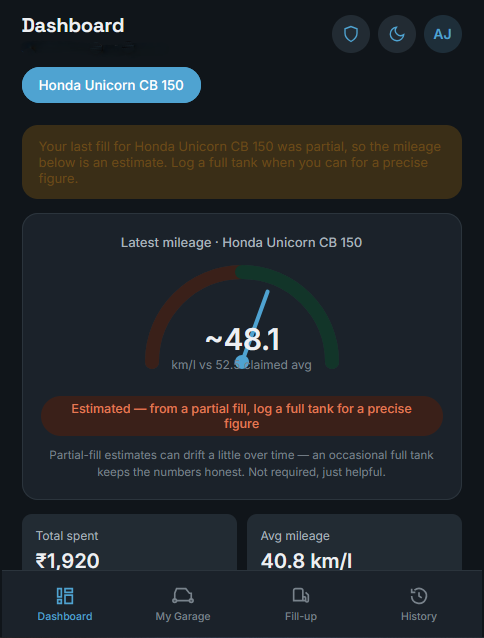
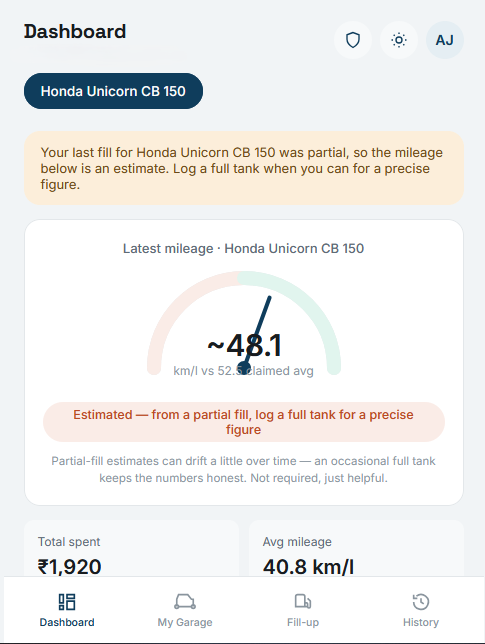
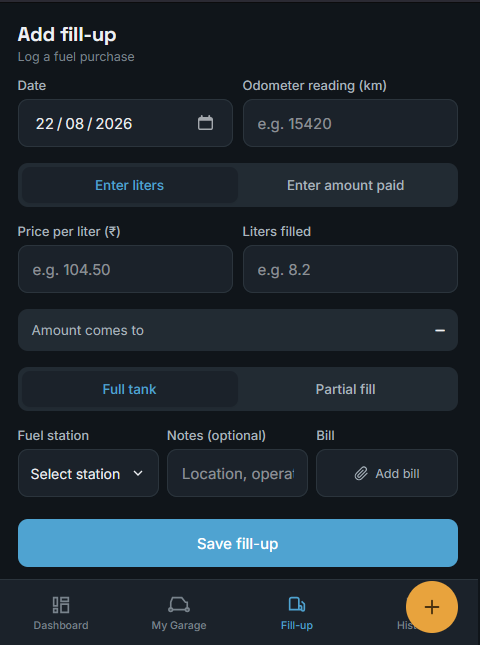
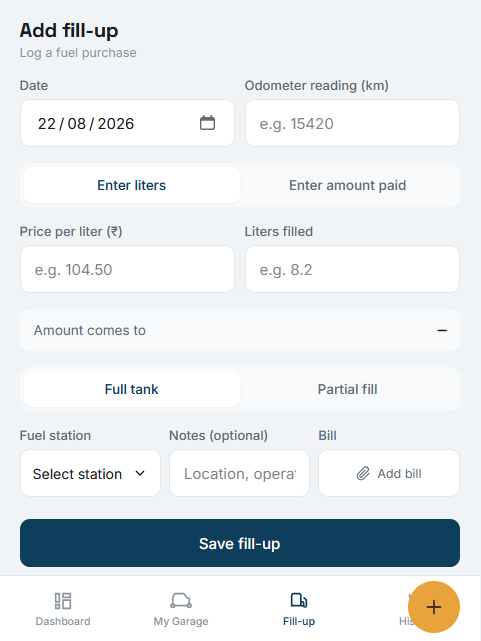
Most fuel apps assume you always top up to full. FuelLog doesn't — log a partial fill and still get a real mileage estimate, not a blank screen waiting for the "right" kind of fill-up.
Every vehicle, one garage
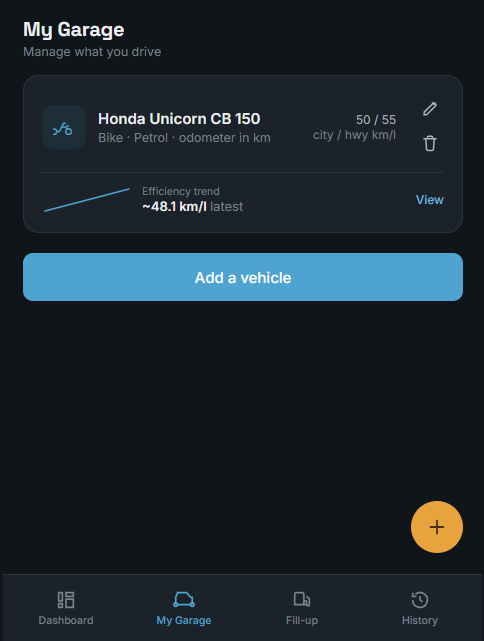
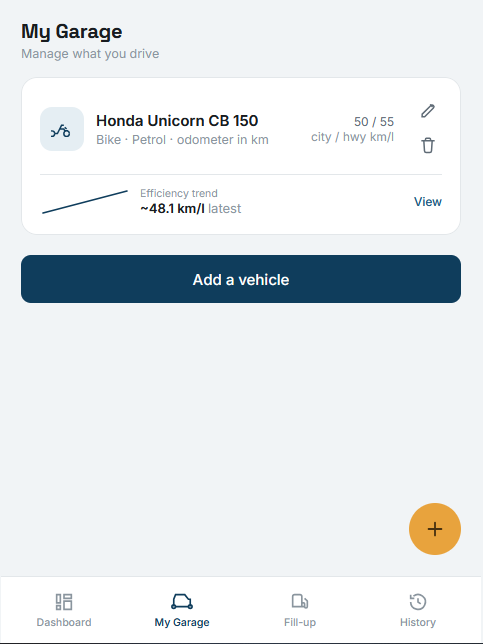
Car, bike, scooter, auto-rickshaw, van, whatever you run — each vehicle keeps its own history, its own claimed mileage, and its own trend line.
Petrol, diesel, or CNG
CNG is priced and measured in kilograms, not liters — FuelLog knows the difference and adjusts the whole form and every calculation accordingly.
Trends, not just numbers
Watch your real mileage against the claimed figure over time, per vehicle, so you can actually see whether it's holding up or slipping.
Know where you filled
Track which station you filled at, keep the receipt photo if you want proof, and export it all whenever you need it.
Yours on any device
Your account, not your phone, holds your data — log a fill-up on your phone at the pump, check the trend on a laptop later.
Inside FuelLog
A clearer view of your fuel